

This symbolic knot has been closely tied to Staffordshire’s heritage, carrying the weight of centuries in every twist and turn. When inked as a tattoo, this distinctive three-looped design symbolizes more than just a connection to a place—it represents unity and tradition rooted in English heritage.
By wearing a Staffordshire knot tattoo, you’re not just making a fashion statement – you’re showing respect for the county’s storied past and the icons that define it. Hailing from Staffordshire or simply drawn to its symbolic significance, this tattoo acts as a proud beacon of identity and devotion. With every brushstroke, a story unfolds – one of resilience, community, and cultural pride, culminating in a masterpiece that stands the test of time.
Origin And History Of The Staffordshire Knot
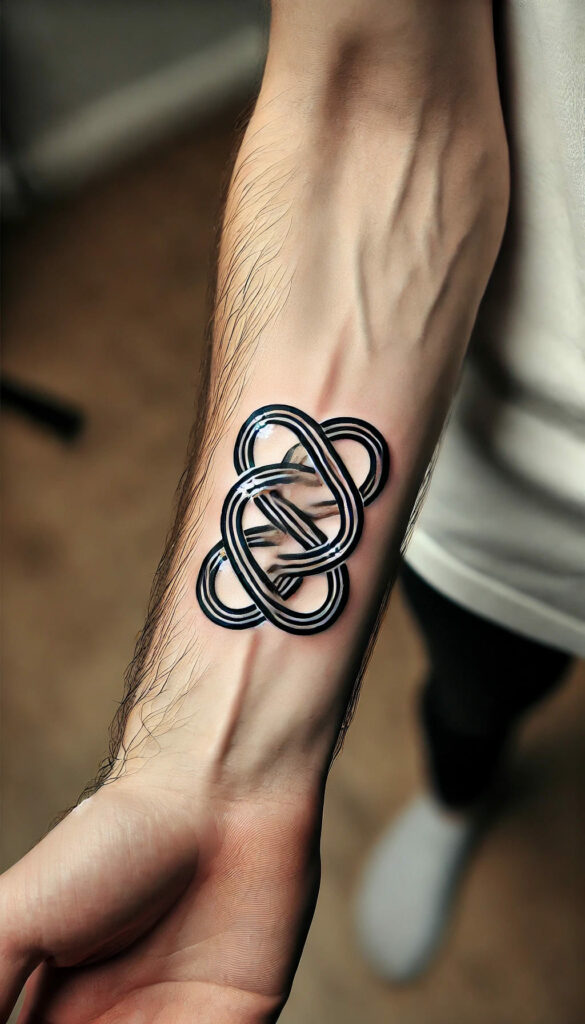
In Staffordshire, England, you’ll find a sleek, three-looped design proudly worn as a badge of honor – the Stafford Knot. Roots of legend and fact entwine to reveal the county’s vibrant past.
Legends Surrounding the Stafford Knot
One prevalent legend involves three criminals condemned to death in Stafford. To execute them simultaneously, the knot was devised to use a single rope for all three hangings. Another tale attributes the knot to Ethelfleda, daughter of Alfred the Great, who symbolically united three regions that became modern Staffordshire by binding them with her girdle.
Historical Evidence of the Stafford Knot
The earliest authentic appearance of the Stafford Knot dates back to before the Norman Conquest of 1066, found on ancient Saxon crosses in Staffordshire. The first documented use appears on a seal in the British Museum, owned by Joan, Lady of Wake, who died in 1443. Her nephew, Humphrey, Earl of Stafford, adopted the knot as his family badge before becoming the Duke of Buckingham in 1444. The knot symbol extended to the townspeople of Stafford, integrating into the Borough Coat of Arms and remaining a prominent emblem even after the 1974 local government reorganization.
The Stafford Knot in Heraldry and Modern Usage
Initially a family badge, the Stafford Knot became widespread, appearing on road signs, army berets, and sports team badges within Staffordshire. Unity and local pride are tangible in the knot’s quiet yet formidable presence, a reminder of the community’s strength.
| Year | Event |
|---|---|
| Before 1066 | Earliest Stafford Knot on Saxon crosses |
| 1443 | First authentic appearance on Joan Lady of Wake’s seal |
| 1444 | Adopted by Humphrey, Earl of Stafford as family badge |
| 1974 | Continued use in the newly formed Stafford Borough Coat of Arms |
The Stafford Knot’s blend of legend and historical authenticity makes it a powerful symbol for those choosing a Staffordshire knot tattoo, encapsulating centuries of tradition and community spirit.
What’s Hidden in the Threads of a Knot Tattoo?
It’s the epitome of cultural nostalgia – the Staffordshire Knot tattoo holds the collective memory of a community close to its heart. The lines, the shapes, the very essence of this design – it’s all infused with the essence of Staffordshire, speaking volumes about its storied past.
Cultural Significance
I discovered that the Stafford Knot holds significant roots in English history, particularly within Staffordshire. Three regions, one people – that’s the spirit behind the triple-looped pattern, which reflects the fusion of Staffordshire’s communities into a harmonious whole. Historically, the knot appears on ancient Saxon crosses predating the Norman Conquest of 1066. Its first recorded use was on a seal in 1443 as the family badge for Humphrey, Earl of Stafford. Local pride swelled when the borough’s coat of arms gained a new symbol, its history now seared into the community’s identity. The humble knot has assumed a prominent place in our cultural landscape, adorning road signs, military uniforms, and athletic team emblems, silently proud of its community-minded heritage.
Personal Meaning
I understand that individuals choose the Staffordshire Knot tattoo to express their connection to Staffordshire’s heritage. Imagine a cord that weaves together who you are, what you stand for, and the community that supports you – that’s what the knot represents. In Staffordshire, a cultural icon stands tall, reminding all of the area’s deep-seated unity and collective historical significance. Born and bred or drawn to its iconic status, the tattoo stands strong as a badge of personal heritage and shared roots.
Design Elements And Variations
I explore the distinct design elements and variations of the Staffordshire Knot tattoo.


Traditional Styles
Traditional Staffordshire Knot tattoos feature a gold knot against a red background. With echoes of the past resonating through every thread, this cherished design masterfully honors the historic tie between the North Staffordshire Regiment’s badge and the iconic football team shirts that proudly feature the revered knot. Often, the double ‘S’ symbolism represents “Staffordshire,” reinforcing regional pride. For example, Robbie Williams sports a traditional gold knot on his hand, paying tribute to his Stoke-on-Trent roots.
Modern Interpretations
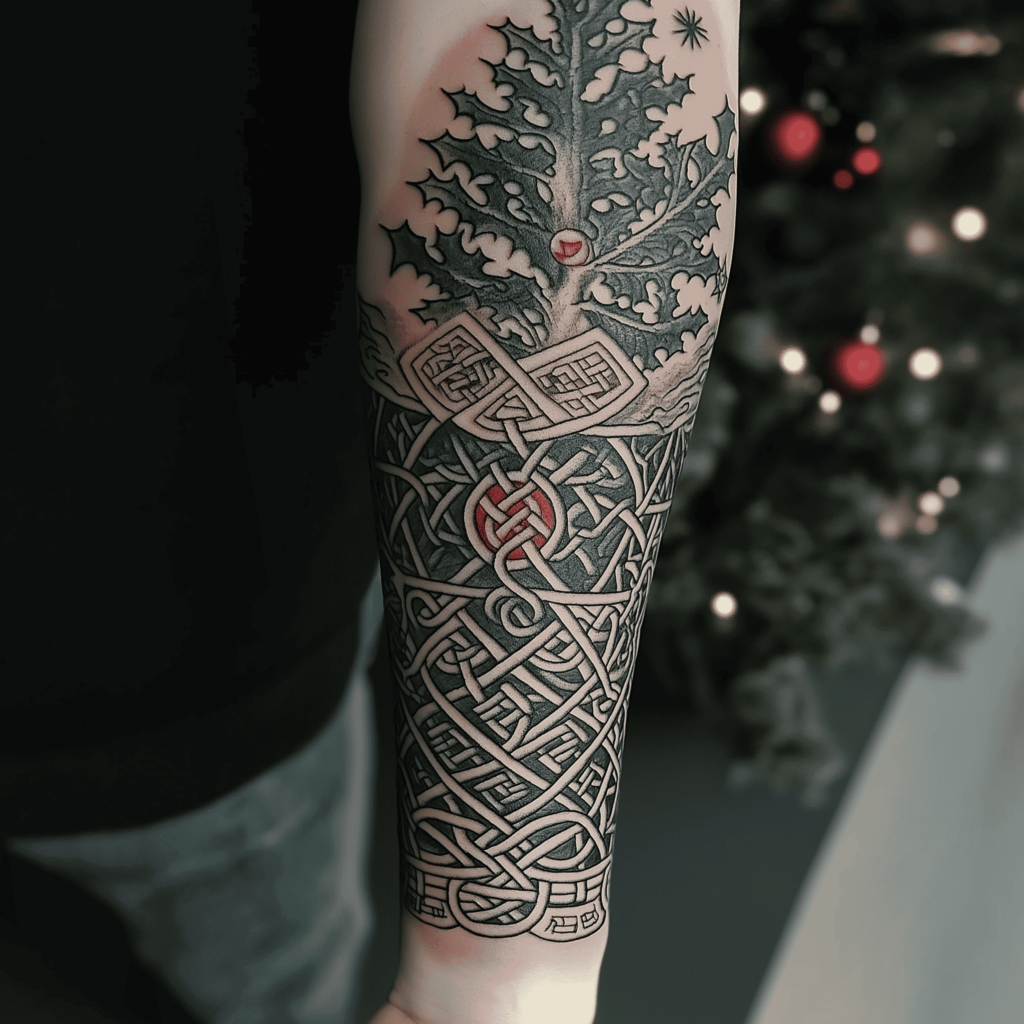
Modern interpretations of the Staffordshire Knot tattoo incorporate diverse styles and colors. Art’s dimensionality kicks in when black and grey tones converge. But for some, it’s not just about nuance – it’s about electrifying the canvas with shots of vibrant color. Line designs can be spare and elegant, or packed with elaborate details – the result is a truly customized experience that reflects your personality. From merging family crests to interweaving Celtic patterns, individuals curate meaningful compositions that poignantly capture their heritage and essence.
Choosing The Right Tattoo Artist

Selecting the right tattoo artist ensures your Staffordshire knot tattoo matches both your vision and the symbol’s rich heritage. I’ve developed a method to sniff out the ideal creative talent, and it’s worked like a charm every time.
Researching Artists
- Specialization : Hunting for talented tattooists, I prefer those with a knack for classic, culturally rooted designs, often found on popular online platforms. Tattoodo is where passion meets art, creating a vortex of imagination that pulls in people from all walks of life. As they connect over their love for tattoos, participants start to shape a space that’s truly their own. Don’t forget the other half of the Facebook family
- Portfolios and Reviews : I review portfolios and read client feedback to confirm their experience with similar designs.
- Community Recommendations : Engaging with tattoo communities on Reddit helps me see others’ Staffordshire knot tattoos and gather artist recommendations.
- Local Conventions : I visit local tattoo conventions or studios known for traditional tattoos to meet skilled artists in person.
- Color Choices : I choose between traditional gold and red or opt for modern black and grey shading to match my style.
- Design Enhancements : I incorporate additional elements like family initials or Celtic patterns to add personal significance.
- Style Variations : I explore minimalist designs or intricate 3D effects to suit my aesthetic preferences.
- Placement and Size : My tattoo’s location is a personal decision – I think about what will make the design stand out, and how it’ll feel to have it in that spot, long-term.
Placement And Sizing Tips
Selecting the appropriate placement and sizing for your Staffordshire Knot tattoo ensures it accurately reflects your desired detail and complements your body.
Sizing
The tattoo size depends on the design’s complexity. Use the following guidelines to determine the best size for your Staffordshire Knot tattoo:
| Size | Inches (cm) | Suitable Placement |
|---|---|---|
| Small | 2-3 inches (5-7.5 cm) | Wrist, ankle, behind the ear |
| Medium | 3-5 inches (7.5-12.5 cm) | Forearm, upper arm, back of neck |
| Large | 5-7 inches (12.5-17.5 cm) | Thigh, shoulder, upper back |
Placement

Choose a tattoo location that accommodates the size and suits your lifestyle:
- Wrist : Ideal for small designs; allows for easy visibility.
- Ankle : Best for small tattoos; offers a discreet placement.
- Behind the Ear : Suitable for small tattoos; provides a subtle and personal touch.
- Forearm : Perfect for medium sizes; ensures visibility and flexibility.
- Upper Arm : Accommodates medium tattoos; allows for versatile display.
- Back of Neck : Works well for medium sizes; can be easily shown or concealed.
- Thigh : Best for large designs; offers ample space and privacy.
- Shoulder : Ideal for large tattoos; provides a broad canvas for intricate details.
- Upper Back : Suitable for large sizes; ensures a prominent and expansive placement.
A tattoo’s design may be rad, but its real power lies in how it relates to your physical presence – when size and placement synergize, your art transforms into a bespoke reflection of your personality, amplifying your aura and magnetism.
Aftercare For Your Knot Tattoo
Immediate Aftercare (First 24 Hours)
- Keep the tattoo wrapped : I leave the bandage or wrapping on for at least 2-3 hours or as advised by my tattoo artist to protect the area from bacteria.
- Clean the tattoo gently : I wash the tattoo with lukewarm water and a mild, fragrance-free soap, then pat it dry with a clean paper towel.
- Apply a thin layer of ointment : I use a recommended healing ointment to keep the tattoo moist without clogging pores.
Ongoing Aftercare (Days 2-14)
- Moisturize regularly : I apply a fragrance-free moisturizer 2-3 times daily to prevent dryness and itching.
- Avoid direct sunlight : I keep the tattoo covered or use a high SPF sunscreen to protect it from UV rays, which can fade the ink.
- Do not scratch or pick : I resist the urge to scratch or peel any scabs to ensure optimal healing and prevent scarring.
Long-term Aftercare
- Continue using sunscreen : I apply sunscreen to the tattooed area whenever exposed to sunlight to maintain ink vibrancy.
- Keep the skin hydrated : I regularly moisturize the tattoo to keep the skin healthy and the colors bright.
- Wear loose clothing : I choose loose-fitting clothes over the tattooed area to avoid irritation and friction.
- Stay hydrated and healthy : I drink plenty of water and maintain a balanced diet to support the healing process.
- Follow artist’s advice : I adhere to any specific aftercare instructions provided by my tattoo artist to ensure the best results.
Popularity And Trends
Seeing the Staffordshire knot tattoo trend grow is truly exciting. The proliferation of this symbol is heartening – it’s a badge of honor that says, “I’m proud of where I come from” and “I stand with others like me.” The diverse styles available mean everyone can find a design that resonates with them. Whether it’s traditional or modern the knot remains a powerful emblem. Choosing this tattoo feels like connecting with something deeper a lasting tribute to Staffordshire’s rich legacy. Something extraordinary happens when people come together around this symbol – it’s as if their collective spirits are lifted, their sense of community renewed.
Frequently Asked Questions
What is the significance of the Staffordshire knot?
A celebrated symbol of English heritage, the Staffordshire knot distills the spirit of unity and tradition into three simple yet striking loops. Rooted in Staffordshire’s history, a strong community identity takes hold. Whenever someone dons the Staffordshire knot, they’re proclaiming their allegiance to a long line of tradition and community, where the threads of past and present are beautifully intertwined.
The allure of a Staffordshire knot tattoo is strong – but why do people love it so much?
By embracing a Staffordshire knot tattoo, you’re connecting with a rich heritage that’s bursting with character and history. Behind every curve and line of this magnificent artwork lies a symphony of community spirit, announcing to the world what we’re all about. If you’re a local or simply a fan of the county, this tattoo speaks to you on a deeper level, mirroring the values of unity, family ties, and devotion to Staffordshire’s storied past.
What is the history of the Staffordshire knot?
The Staffordshire knot dates back to before the Norman Conquest of 1066, appearing on ancient Saxon crosses. Its first documented use was on a seal in 1443 and later became a family badge for Humphrey, Earl of Stafford. Symbolizing their spirited legacy, this valued element resonates loud and clear, deeply embedded in everything from municipal markers to athletic attire, a steadfast representation of community history and localized passion.
How to design a Staffordshire knot tattoo?
Designing a Staffordshire knot tattoo involves choosing traditional or modern styles that reflect personal heritage. Traditional designs often feature a gold knot on a red background, while modern interpretations may include black and grey shading, vibrant colors, minimalist lines, or 3D effects. Personalization can include adding family initials, Celtic patterns, or other symbols to create a unique representation of one’s connection to Staffordshire.
What are the variations of the Staffordshire knot tattoo?
Variations of the Staffordshire knot tattoo include traditional styles with gold and red colors, black and grey shading, vibrant hues, minimalist designs, and intricate 3D effects. Designs can get a personal touch with added flourishes like family crests or traditional Celtic knotwork. Whether you’re a traditionalist or a rebel, the diverse range of knot tattoos ensures that your personal style shines through while respecting the symbolism.
How to choose a tattoo artist for a Staffordshire knot tattoo?
Researching tattoo artists who specialize in traditional or heritage-themed designs is the first step in finding the perfect fit. Flip through their portfolios to see if they can reign in the nuanced details of the Staffordshire knot. How about pooling the community’s collective knowledge, tracing the footsteps of those who’ve come before you through reviews, and popping by an artist’s studio to walk them through your ideas? A skilled artist will align the tattoo with both your personal style and the knot’s historical significance.
What are the best placements for the Staffordshire knot tattoo?
Common placements for the Staffordshire knot tattoo include the wrist, ankle, forearm, upper arm, thigh, and upper back. The size and complexity of the design should guide the placement choice. Smaller tattoos suit areas like the wrist and ankle, medium sizes work well on the forearm and upper arm, while larger designs are ideal for the thigh and upper back, ensuring the tattoo is both aesthetically pleasing and personally meaningful.
How to care for a Staffordshire knot tattoo?
Proper aftercare is essential for maintaining a Staffordshire knot tattoo. Immediately after getting the tattoo, keep it wrapped, clean it gently, and apply a healing ointment. Continue regular moisturizing, avoid direct sunlight, and do not scratch or pick at the tattoo during healing. To keep your tattoo looking its absolute best, you’ll want to focus on protection, hydration, and TLC. By using a broad-spectrum sunscreen daily, drinking plenty of water to keep your skin cells functioning at their best, and wearing gentle fabrics, you’ll be giving your body art the care it needs to thrive.
What colors are commonly used in Staffordshire knot tattoos?
Traditional Staffordshire knot tattoos often feature gold knots against a red background, reflecting historical uses in military and sports emblems. Modern interpretations may include black and grey shading for a classic look or vibrant colors for a more contemporary style. A pop of color or a gradient can entirely reinvigorate a design while still honoring the time-honored essence of the knot.